


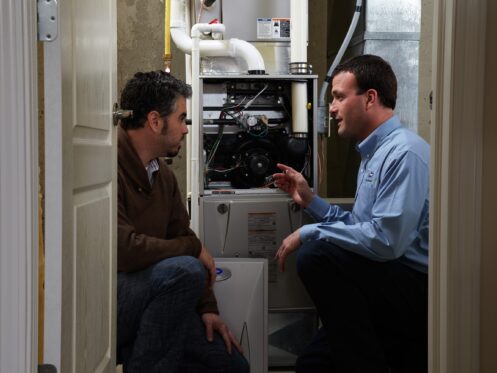
When Cleveland hits its coldest stretch, a furnace that seemed fine in December can start feeling like it is working nonstop with little payoff. You might notice simple issues like airflow restrictions, thermostat problems, or a burner and ignition system that is not running clean. You could also be facing more serious issues that point to equipment that needs repair.
At Anderson Heating, Cooling, Plumbing & Electric, we are here to help when your furnace can’t keep your home warm. Read on to learn about what causes this problem and what you can do to fix it.
Airflow Problems Can Make a Strong Furnace Feel Weak
A furnace can create plenty of heat and still leave you cold if airflow is restricted. Think of the system like a delivery route. If the route gets blocked, the heat never reaches the rooms that need it. Restriction can happen when a filter is clogged, the blower wheel is dirty, or the return side cannot pull enough air. You might notice louder intake noise at the return grille or a new whistling sound at a register. You might also feel one supply pushing hard while another barely moves the air. Those differences show up most during deep cold because the furnace runs longer and the house demands more circulation.
Room pressure can add another twist. A bedroom with a supply register and a closed door can trap air if there is no clean return path. The room may warm slowly and drift cold again because the airflow loop never balances. To fix this issue, try changing the furnace filter and ensuring all vents and registers are open and unblocked. If that doesn’t do the trick, an HVAC professional can measure airflow, check static pressure, confirm blower performance, and look for bottlenecks in duct runs that starve the far rooms.
Thermostats & Controls Can Send the System Into Costly Cycles
When the heat can’t keep up, the thermostat often gets blamed first. A thermostat placed near a draft, a sunny window, or a frequently used exterior door can misread the space. You end up with a system that cycles based on the wrong conditions. Scheduling can create trouble, too. Deep setbacks may trigger long recovery runs during the coldest hours. That can feel like the furnace is always on, even though it is responding to a schedule that asks for a big climb. Make sure you are changing your thermostat in small increments instead of large leaps all at once.
Short cycling is another common control-related issue. The furnace turns on, runs for a short time, shuts off, and then starts again. This often happens when the system overheats due to restricted airflow, a tripped limit switch, or control settings that don’t align with the equipment. Smart thermostats can also contribute to the problm if staging and cycle settings aren’t properly configured for your furnace. A technician can check calibration, verify wiring, review cycle history, and adjust controls so your system runs longer, steadier cycles that match your home’s actual heating demand.
Combustion & Ignition Issues Often Show Up During Extreme Cold
Cold weather forces longer run times, and that is when marginal ignition or combustion problems start to surface. A furnace may light, then shut down and retry if the flame sensor is dirty or the flame signal is weak. You may hear a sequence of clicks, a brief whoosh, then the system stops and tries again. Sometimes, the blower runs with cooler air while the furnace attempts another ignition cycle. That pattern can leave you with long periods of circulating air that doesn’t feel warm, especially in rooms far from the furnace.
Draft and venting conditions matter too. High winds and heavy demand can expose problems with intake, exhaust, or vent piping. If the furnace cannot vent properly, safety controls can shut it down. That is the system protecting your home, yet it also means heat output drops when you need it most. Combustion work is not a DIY fix, so you should always contact a heating company when you are dealing with combustion or ignition issues. A licensed technician can test gas pressure, inspect burners, verify flame characteristics, confirm venting integrity, and check safety switches that may be interrupting heat. When combustion runs clean and stable, the furnace can deliver consistent heat through long cycles.
Heat Loss & Duct Leakage Can Outrun Your Furnace Output
Sometimes, the furnace is doing its job, but the house is losing heat faster than the system can replace it. Extreme cold magnifies every weak spot in the building shell. Attics with thin insulation, rim joists with gaps, and older windows with leaky frames can pull heat out of the home all night. You often feel this as cold floors near exterior walls, drafts near baseboards, or a room that drops fast as soon as the furnace shuts off.
Duct leakage can create the same effect. If supply ducts run through unconditioned spaces and have gaps, heated air can spill into areas you do not live in. If return ducts leak, they can pull in cold air from basements, attics, or wall cavities and send it straight back to the furnace. That lowers comfort and increases run time.
To solve heat loss issues, make sure to seal any leaks around doors and windows. Thermal curtains can also help with heat loss aroud windows. Additionally, ensure your home is properly insulated. If the problem lies with your ductwork, a professional duct evaluation can identify leakage, poor insulation on duct runs, and balance issues that starve certain rooms. When the home holds heat better, the furnace has a fair chance to keep up.
What To Do Next When Heat Still Feels Short
If your furnace can’t keep up on the coldest days, focus on observations that help a professional diagnose the issue faster. Notice which rooms fall behind first, how long the furnace runs before shutting off, and whether the system restarts soon after. Pay attention to new noises, like whistling at registers, repeated ignition attempts, or a blower that ramps up and down. If you have multiple thermostats or zones, note which areas struggle and which feel stable. These details help a technician decide whether to start with airflow testing, combustion checks, duct diagnostics, or control troubleshooting.
During extreme cold, quick fixes and thermostat guessing often waste time and can create new problems. A service visit can confirm safe operation first, then isolate the reason the heat output is falling short. That may call for furnace repairs such as repairing ignition components, correcting airflow restrictions, sealing duct leaks, adjusting controls, or addressing heat loss points that make the house hard to heat.
Get Your Heat Back on Track Before the Next Cold Snap
When your furnace struggles in extreme cold, the smartest move is to get the root cause identified quickly so that you are not stuck chasing comfort room by room. A professional visit from Anderson Heating, Cooling, Plumbing & Electric can uncover airflow issues, thermostat misreads, ignition problems, or safety lockouts that keep the system from delivering full heat. We also help with furnace maintenance, repairs, safety inspections, airflow and duct evaluations, thermostat troubleshooting, and indoor air quality support that can make winter comfort feel steadier.
Schedule a furnace performance check with Anderson Heating, Cooling, Plumbing & Electric today so that your home is ready for Cleveland’s next cold stretch.