


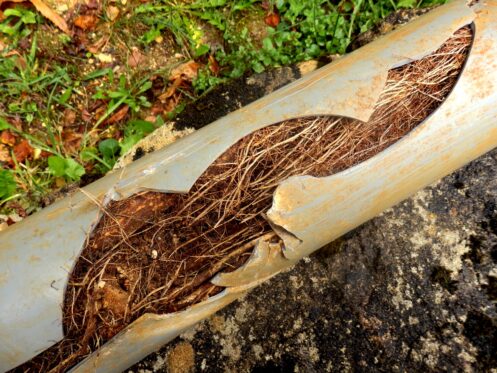
Tree root intrusion is a common problem in Cleveland, OH. When underground root systems encroach on sewer pipes, they block the flow of wastewater and create the conditions for whole-house backups. With many large and aggressive tree species and long, dry summers, locals have their work cut out for them. From regularly assessing your sewer pipe’s integrity to carefully managing your landscape, there’s much that you can do to keep your sewer line clear.
What Is Tree Root Intrusion?
Your sewer pipe travels underground from your home to the municipal sewer system. With below-freezing temperatures from December to February, Cleveland plumbers bury sewer pipes four to six feet deep. As such, local sewer lines and fast-growing tree roots often share the same space.
When sewer pipes have cracks, offset sections, or other leaks, raw sewage seeps into the surrounding soil. Upon detecting this moisture, tree roots grow toward sewer pipes to access their nutrient-dense contents. Tree roots can send out hair-like extensions that can enter sewer pipes via openings less than a millimeter wide. Once inside, these roots grow exponentially.
Fast-growing tree roots can block sewer pipes completely. As they expand, they can also widen existing cracks and accelerate other age or wear-related damage.
How Tree Root Intrusion Affects Your Drains
Every drain in your home empties into your sewer pipe. Your dishwasher, washing machine, and other plumbing-connected appliances send wastewater to your sewer line, too. If your sewer line has an obstruction caused by invasive tree roots, your waste and wastewater will have nowhere to go back indoors. Whole-house backups send effluent into all connected drains and appliances.
Signs of an Impending Whole-House Backup
Although trees proliferate upon entering sewer lines, they don’t cause whole-house backups overnight. Before invasive tree roots block your sewer line completely, you’ll notice a few tell-tale signs:
- Gurgling, bubbling, or sucking sounds in drains
- Multiple slow-moving or clogged drains
- Frequent drain clogs or overflows
- Pungent sewer gas odors
As cracks in sewer pipes expand, you might additionally notice changes in your yard, such as standing water and perpetually muggy or soggy terrain. The effluent that seeps out of your sewer pipe can also make your grass look suddenly lush and healthy.
Factors That Make Cleveland Homes More Susceptible
Cleveland and other Ohio cities have multiple risk factors for sewer pipe encroachment. The risk of tree root intrusion is especially high for older homes with mature landscaping. Factors like outdated plumbing systems and older, well-established root systems place pre-existing construction at a greater risk for sewer line issues.
Clay Soil
Cleveland has heavy clay soil. This allows for greater soil compaction and places more weight and strain on aging sewer pipes. Although compaction makes it more difficult for tree roots to penetrate subterranean soils, it also forces them to pursue the paths of least resistance. Thus, local root systems are more likely to grow toward building foundations and underground utilities.
Large and Well-Established Trees
Cleveland has many large and well-established trees with strong root systems. The most prevalent tree species throughout the region have shallow, water-seeking roots. These include:
- Elm trees
- Oak trees
- Poplars
- Willows
- Silver maples
These and other local tree types have roots that can grow great distances from trunk bases.
Prolonged Dry Spells
Cleveland has cold, snowy winters and hot, humid summers with prolonged dry spells. Dramatic temperature fluctuations from season to season cause sewer pipes to expand and contract. These temperature-related movements can create cracks, offset sections, and other damage. During dry spells, water-seeking roots take advantage of newly created access points.
Strategies for Preventing Tree Root Intrusion
Preventing tree root intrusion in Cleveland is an ongoing, multi-pronged effort. The trees on and around your property will always be a threat to your sewer pipe. As such, you should always have multiple strategies in play to mitigate the risk of encroachment.
Regular Sewer Line Inspections
Professional sewer line inspections allow plumbers to assess the integrity and functionality of sewer pipes. This way, they can recommend sewer pipe repairs or replacement before structural changes allow encroachment. They can also identify existing roots in sewer lines and remove them before whole-house backups occur.
In general, homeowners should schedule sewer line inspections once every 18 to 22 months. However, if you have multiple trees on your property, an older sewer line, or a terracotta sewer pipe, you should schedule these inspections once each year.
Routine Sewer Maintenance
Hydro-jetting, hydro-steaming, and rooter service remove invasive tree roots by breaking them down and flushing them out. Professional sewer line cleaning also removes heavy hard water sediment, trapped grease and hair, and other buildups. Routine cleaning limits internal pressure and can extend the lifespan of sewer pipes.
If your risk of sewer line encroachment is relatively low, you can schedule sewer line cleaning every 18 to 22 months. If your risk is high, schedule sewer line maintenance annually.
Schedule Drain Cleaning
At any point in your plumbing system, slow-moving waste can cause heavy buildups in your sewer line. Slow-moving waste is more likely to harden and attach to pipe walls than fast-moving waste. To keep your wastewater moving swiftly, schedule drain cleaning service once each year. You can schedule drain and sewer service at the same time for cost savings and convenience.
Strategic Planting
It’s important to plant trees at least 10 feet away from sewer pipes. If planting tree species with aggressive, water-seeking roots, plant them at least 15 feet away.
When removing problematic trees, pay for professional stump removal or stump grinding. Tree stumps can maintain active and aggressive root systems for several years.
Sewer Pipe Replacement
If you have a terracotta sewer pipe or an older sewer line with advanced corrosion, pitting, or cracking, schedule sewer pipe replacement. Replacing a leaky sewer pipe is often much cheaper than repairing the damage from a whole-house backup or massive sewer line leak. With trenchless sewer replacement or repairs, you can limit your risk of tree root intrusion without disrupting your landscape.
Install Root Barriers
Install root barriers to protect your sewer pipe and your home’s foundation. In addition to shielding underground infrastructure, root barriers can protect sidewalks, walkways, and patios from adverse, root-related changes.
Weeds Are Problematic, Too
When it comes to protecting your sewer pipe from root intrusion, tree roots aren’t your only concern. Local weeds can have aggressive root systems, too. Regularly weed your yard and use pre-emergent herbicides to keep additional weed growth at bay.
Get Help Protecting Your Sewer Pipe Today!
The time to proactively protect your sewer pipe is now. Anderson Heating, Cooling, Plumbing & Electric is a top choice for drain and sewer service in Cleveland and the surrounding communities. With our team of honest, hard-working plumbers, we deliver consistently outstanding results.
Anderson Heating, Cooling, Plumbing & Electric provides sewer line inspection, cleaning, replacement, and repair services. We also offer trenchless sewer services for reduced project costs, faster completion times, and greater convenience. To schedule sewer service in Cleveland, get in touch with Anderson Heating, Cooling, Plumbing & Electric today!