


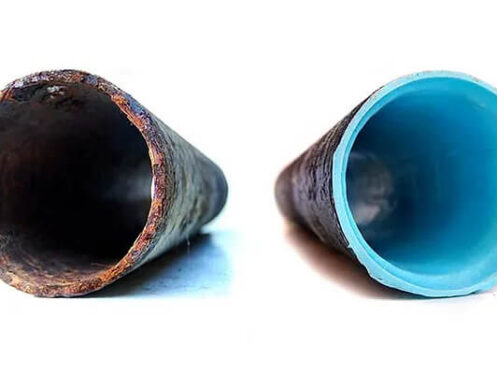
For homeowners, a leak or other damage to underground pipes can be a stressful situation. Piping repair work that involves digging up a lot of your yard can be time-consuming and expensive.
However, cured-in-place pipe (CIPP) lining is a method of repairing damaged or deteriorating underground pipes without digging up the entire plumbing infrastructure. It involves a flexible liner that’s inserted at a strategic point and hardened through a process to form a new pipe.
How Does a CIPP Liner Work?
Plumbing jobs using CIPP liners vary depending on the situation, but they typically follow these steps:
- Professional inspection: Plumbers insert small cameras into pipe systems to assess what’s happening underground and identify areas that need attention. The inspection helps them know whether an issue can be addressed with CIPP liners.
- Pipe cleaning: Hydro jetting or another method is used to remove debris that could impact the installation of a CIPP liner.
- Liner prep: The liner tube is cut to fit the area in question and prepared with resins or other materials.
- Liner insertion: Professionals insert the liner into the pipe at an appropriate access point.
- Liner inflation: Plumbers use air or water pressure to inflate the liner, pressing it up against the walls of the existing pipe.
- Liner curing: Heat, UV light or other methods are used to harden the liner, creating a new pipe within the old pipe infrastructure. This can take up to a day to complete.
Once the interior pipe is hardened and ready for use, professionals use specialized tools to cut open any areas where the pipe feeds other branches of the plumbing system. They also do a final camera inspection to ensure everything is sealed and ready for use.
When Does Cured-in-Place Pipe Lining Make Sense?
Not every type of plumbing service is the right choice for every job. CIPP liners work in specific situations that involve aged or somewhat damaged underground pipes.
A plumber might recommend CIPP liners when:
- Pipes are old and deteriorating. Homes built in the mid-20th century or earlier may have pipes made of outdated materials, such as cast iron or concrete. If those pipes are corroded or starting to collapse, CIPP liners may help support functional plumbing without all-new pipe installation.
- Roots are impacting pipes. In some cases, minor pipe root intrusion that’s causing blockages or cracks might be addressed with CIPP liners. This solution lets professionals bypass the damage and create new, clean and closed lines.
- Joint failures occur underground. When sections between pipes have shifted slightly due to soil movement or other forces, CIPP liners can help reduce leaks and protect plumbing infrastructure from future movement.
- Ground movement or other forces create cracks. More extensive ground movement can crack pipes, and freeze-thaw cycles in Ohio are especially hard on underground plumbing structures. Even heavy movement above, such as over a driveway, can eventually lead to pipe damage that CIPP liners might address.
- Pipes show a concerning amount of wear. In some cases, plumbing teams make a call to proactively insert CIPP liners because pipes show enough wear that it’s a good bet they may fail in the near future. Getting ahead of the problem may help homeowners avoid unnecessary emergency plumbing situations.
When CIPP Isn’t the Right Fit
While CIPP pipe lining can be a flexible tool for professional plumbers and offers numerous potential benefits for homeowners, it’s not always the right choice.
Situations where CIPP liners may not work include:
- Full pipe collapses: Full failure of the existing infrastructure doesn’t leave anything for the liner to conform to.
- Severe pipe alignment issues: Additional work might be required to set pipes before a liner can be inserted effectively.
- Pipe that’s too degraded: They may not support the liner during the inflation and curing steps.
- Active leaks with significant groundwater infiltration: Too much water would make it impossible to harden the liner and create the new pipe.
Certain pipe configurations can also make it difficult or impossible to use CIPP pipe lining. This method doesn’t typically work with small diameter pipes, as there isn’t enough room for the liner and other required equipment. Irregular pipe layouts with too many bends may not allow for liner insertion in a way that makes sense for repairs.
Ask Your Plumbing Professional About CIPP Liners
When consulting with a plumbing professional about repairs to underground pipes on your property, ask whether CIPP liners are an option. Get a professional’s opinion on the cost of various methods for necessary repairs and ask how long each one is likely to last under normal conditions. CIPP liners can last decades when installed correctly.

