


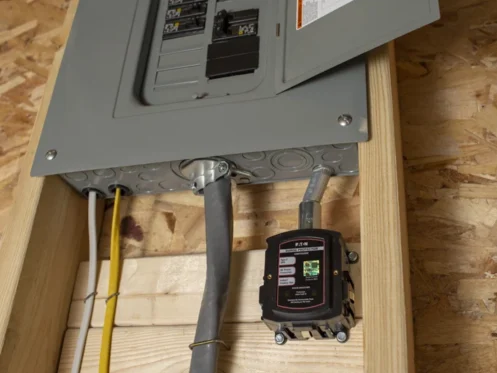
Power surges are brief spikes in voltage that can damage appliances, electronics, HVAC equipment, and home electrical systems. Some people use power strips or surge protectors to reduce the risk, but installing a whole-house surge protector is the best way to protect your home.
Keep reading to learn why power surges are so dangerous and find out how residential surge protection can prevent damage to your belongings.
Internal and External Power Surges: A Brief Primer
Before you schedule home surge protection installation, it’s important to understand the difference between internal and external power surges. An internal surge is when there’s a power spike in one of your home’s electrical circuits. This can occur due to a damaged wire, a malfunctioning appliance, or a short circuit.
An external surge is when the power in the electrical grid spikes, which can happen due to a lightning strike or blown transformer. External surges affect the supply of energy coming into your house, so they’re typically more powerful than internal surges. While internal surges are limited to a single circuit, external surges can damage your entire electrical system and anything that’s connected to it.
What Is Whole-House Surge Protection?
Whole-house surge protection protects your home’s electrical network from sudden voltage spikes. It’s typically installed at the main electrical panel, ensuring it can regulate excess energy before it has a chance to enter your home’s circuits. Therefore, installing a whole-house surge protector adds a strong line of defense for outlets, switches, light fixtures, appliances, HVAC equipment, and electronics.
How Does Residential Surge Protection Work?
A whole-house surge protector acts as a security guard for your electrical system. When a surge occurs, the device uses copper grounding wire in the electrical panel to redirect the current away from the house. The excess current flows through a grounding rod buried deep in the ground. Proper electrical grounding allows a whole-house generator to disperse excess energy into the soil.
Benefits of Installing a Whole-House Surge Protector
Installing a whole-house surge protector offers several benefits:
- Extra layer of safety. Uncontrolled voltage spikes can cause your electrical wiring to overheat, increasing the risk of a house fire. Home surge protection installation helps counter this threat.
- Protects expensive electronics and appliances. In many households, every member of the family has a cell phone and at least one other electronic device, such as a laptop, e-reader, or handheld gaming system. Many appliances also have Wi-Fi and other advanced features. A whole-house surge protector reduces the risk of damage to electronics and appliances.
- Guards against both internal and external surges. Power strips only protect against internal surges and very minor external surges. A whole-home surge protector guards against both hazards.
- Complements the work of power strips. Pairing power strips with whole-home surge protection creates a layered defense system. Power strips can stop small surges close to your devices, while the whole-house surge protector can prevent excess voltage from entering your home.
- Protects smart devices. Because they stop external surges at the electrical panel, whole-house surge protectors can also prevent damage to smart devices, including thermostats, security cameras, locks, and lights.
Schedule Your Home Surge Protection Installation
Since 1982, Anderson Heating, Cooling, Plumbing & Electric has been offering reliable home services in Mentor, Lake County and the Greater Cleveland Area. Contact us today if you’re ready to protect your home against internal and external power surges. We can also repair an existing whole-home surge protector or address electrical damage caused by recent voltage spikes.
Frequently Asked Questions
We answered some common questions to help you better understand the benefits of installing surge protection for the whole house.
Can a Whole-Home Surge Protector Protect Against Lightning Strikes?
In many cases, yes. A good whole-home surge protector should be able to handle over 40,000 amps of electricity without failing. The average lightning strike is 30,000 amps, so most residential surge protection systems can handle lightning strikes with ease.
It’s always possible for a more powerful bolt of lightning to strike your home directly. If that happens, no whole-home surge protector can prevent damage. Fortunately, the risk of a direct strike is extremely low.
Do I Really Need Surge Protection for the Whole House If I Already Use Power Strips?
Yes, you still need surge protection for the whole house even if you already use power strips. If you have an internal surge, a power strip immediately stops power from flowing out of its outlets. This protects televisions, computers, stereos, and other electronics.
A power strip may be able to stop a minor external surge, but it provides no protection against the tens of thousands of joules produced by a significant external power surge. Power strips also do nothing to prevent damage to outlets, switches, and light fixtures. When you have surge protection for the whole house, you can rest easy knowing it guards against both internal and external surges.
How Much Does It Cost to Install a Whole-House Surge Protector?
When choosing a whole-house surge protector, the cost to install varies based on the device’s brand and surge capacity. We may also have to upgrade your electrical system before we can install surge protection, increasing the cost of the project. Contact Anderson Heating, Cooling, Plumbing & Electric for a custom quote.

