


If your sump pump isn’t turning on, it won’t announce itself. A pump that works properly might make a little noise during a wet week, but one that’s stopped working won’t make a peep. If you’ve found out the hard way, stepping onto your wet basement floor barefoot first thing in the morning, you need answers fast.
In Northeast Ohio, summer storms can last for days, and the same weather that keeps your sump pit full can take out your power and flood your basement. Keep reading to learn more about sump pump overflow and see how battery backup for your sump pump can keep your basement dry.
Is Your Sump Pump Not Turning On? Where to Look First
You can check for these sump pump issues yourself.
Power Outage
If your sump pump won’t turn on, there’s a good chance the problem is power-related. Switch it off at the wall, count to ten, and turn it back on again. If it’s still silent, check to see if you have a GFCI outlet with TEST and RESET buttons. GFCIs cut their own power silently when they sense moisture without making a noise. Press RESET.
Tripped Electrical Circuit
Check your electrical circuit breaker to see if the switch is set to ON. If you have too many appliances linked to a single circuit, a sump pump could trip it. Dedicate one circuit to this essential piece of equipment, and protect the outlet from water with a ground fault interrupter.
Blocked Screen or Weep Hole
There’s a screen at the base of your sump pump that can get clogged with grime and hair. Try lifting the pump out and clearing it so water can flow freely. You’ll also find a weep hole in the pipe above the pump that lets air out. Poke any grit with a wire in case it’s clogged and trapping air inside.
Problems With the Float
Your pump switches itself on using a float that clicks the pump on when rising water lifts it to a certain height. If your sump pump won’t turn on, unplug it and lift the float to see if it can move freely. It might be trapped against the pit wall, its cord may be wrapped around the pipe or something might be jamming it. Set the float back in place and see if it fixes the problem.
What It Means When Your Sump Pump Is Constantly Running
A constantly running sump pump is on the road to failure by overheating, potentially leaving you with high electricity bills and a flooded basement. The problem may be a stuck float switch, failed check valve, undersized pump, heavy rain or water leak.
To address this issue, unplug the unit to cool the motor down, then check the pit and outside for dirt and debris. You may need to call a plumber for a flooded basement.
How to Prevent Sump Pump Overflow
Sump pump overflow is when water comes in faster than your sump pump can push it out, so the pit fills and spills on your floor. To prevent it, start by:
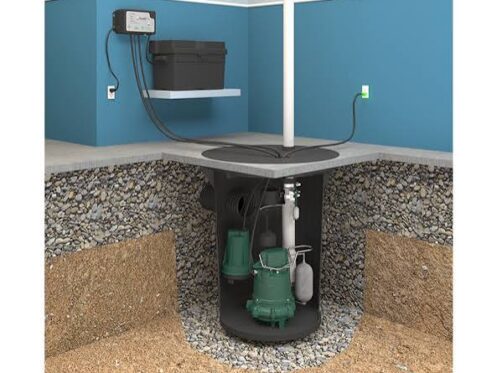
- Adding battery backup for your sump pump. Severe Ohio storms lead to power outages, which can stop your electric sump pump from working and lead to a flooded basement. A battery-powered backup system kicks in when the power goes out and keeps your pump running for up to eight hours. If power outages happen a lot near you and last overnight, you might also want to invest in a power generator.
- Check the foundation around your home. It should slope away from your property to stop water pooling around the basement and overloading the sump pump. What’s more, the discharge pipe should be at least 10 feet away from the foundation so water doesn’t flow back and overwhelm the pump.
When to Call a Plumber for a Flooded Basement
Call a plumber right away if:
- Water is near an outlet, your furnace or the electrical panel. Don’t walk in at all if this is the case.
- You hear a loud buzzing noise or smell burning.
- The pump is seven years old or more.
- The breaker trips the second you reset it, which usually points to a shorted motor.
- You smell sewage rather than damp earth, which points to a damaged sewer line, not groundwater.
Before the plumber arrives, try to unplug the unit, clear away any debris, use a wet/dry vacuum or buckets to get rid of excess water. One inch of water in an average-size home can cause roughly $25,000 of damage. That makes a service call an easy choice.
Catch It Early, and It’s a Small Fix
Once a month, pour five gallons of water slowly into the pit. The float should rise, the motor should start, and water should leave the pipe outside. A sump pump not turning on is a cheap repair the month you catch it, and a very expensive one the morning you don’t.

