


The amount of moisture in your home can affect how your living space feels and how well your house holds up over time. When home humidity levels are out of balance, you may notice signs such as dry air, condensation, mold growth and wood damage. In this guide, we’ll explain what is considered high humidity versus low humidity in your Cleveland home. We’ll also share tips for keeping your home’s moisture levels within an ideal range year-round.
What Is Considered High Humidity?
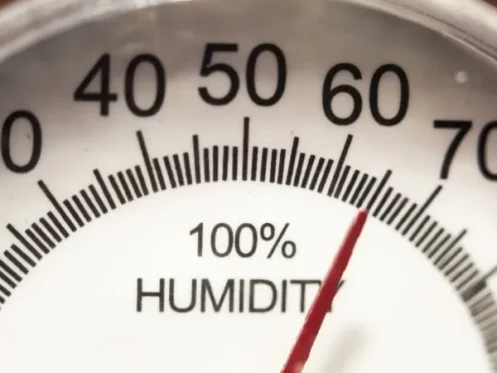
Indoor humidity levels above 60% are considered too high, according to the U.S. Environmental Protection Agency (EPA). When there’s too much moisture, mold, mildew and dust mites can thrive, affecting indoor air quality.
The EPA suggests that ideal humidity for most homes is between 30% and 50%. This range helps maintain a pleasant indoor environment while preventing the problems that come with overly dry or damp air.
Measuring Home Humidity Levels
Relative humidity (RH) is the most common way to measure indoor humidity. It refers to the amount of moisture in the air compared to the maximum possible at that temperature.
To measure RH, you’ll need a hygrometer or humidity sensor. This small device can be placed in commonly used areas, such as living rooms and bedrooms, as well as spaces where moisture levels may be higher, such as basements and bathrooms.
Keep in mind that the best humidity level for your home can vary throughout the year. During Ohio winters, the lower end of the 30% to 50% range is preferred because cold outdoor temperatures can increase the likelihood of condensation on windows and other cool surfaces. During the summer, a higher RH within this range is usually acceptable because there’s naturally more moisture in the air.
What Affects Home Humidity Levels?
Humidity levels can fluctuate from day to day based on factors such as:
- Outdoor temperature. Humid summers can bring more moisture into your home, increasing indoor RH.
- Heating and cooling systems. Running your furnace can dry out indoor air, while using your AC can help remove some moisture during warmer months.
- Indoor activities. Cooking, showering and running a clothes dryer often increase moisture in the air.
- Poor home sealing. Gaps or cracks around windows and doors can let unwanted moisture seep into your home.
Effects of High Humidity
As RH approaches 60% or higher, your home may feel warmer than the temperature suggests. This doesn’t mean something’s wrong with your thermostat; the extra moisture can make you uncomfortably hot and sticky. Rooms may feel muggy even if the AC is running. Over time, the damp indoor environment can damage your home.
High humidity may contribute to:
- Visible mold or mildew
- Warped wood or bubbling paint from moisture seeping in
- Condensation on windows
- Wet spots on walls or ceilings
- A damp, musty smell
Effects of Low Humidity
When humidity levels are low, the air inside your home can become excessively dry. This is especially common during the colder months, when outdoor air contains less moisture and your heating system runs more often. While low humidity is less likely to cause mold or mildew, it can still affect parts of your home and make you feel uncomfortable.
Low humidity may contribute to:
- Dry, itchy skin and eyes
- Chapped lips
- Scratchy throat
- Nasal congestion or nosebleeds
- Increased static electricity
- Cracks or gaps in flooring or furniture as wood loses moisture and shrinks
Choosing the Right Humidity Solution
Now that you know what the humidity should be in your house and how to measure it, you can decide whether adjustments are needed. Getting a dehumidifier or humidifier may help if you’re consistently struggling to maintain ideal humidity for your home.
Dehumidifiers to Remove Moisture
If the normal humidity in your house is above 50%, consider a dehumidifier to help bring levels within the EPA’s suggested range. Dehumidifiers work as part of your HVAC system or as a standalone appliance, drawing in air, removing excess moisture and sending drier air back into your home.
Air conditioners remove some humidity from the air (the water that collects in your AC’s drain pan is condensed moisture), but this is incidental to the cooling process. An AC isn’t always enough to keep humidity within the recommended range.
Humidifiers to Add Moisture
If indoor RH falls below 30%, you can use a humidifier to boost moisture levels. Similar to dehumidifiers, these may be part of a whole-home HVAC system or a portable appliance used in one area, such as a bedroom. Be sure to follow the manufacturer’s instructions for maintaining the unit and watch for condensation on windows, which may suggest there’s too much moisture.
Keeping Your Home’s Humidity in Balance
In addition to using a humidifier or dehumidifier, consider a few simple, everyday habits and home maintenance tasks to help keep moisture levels in check:
- Optimizing ventilation. Turn on the bathroom fan while showering, and use the stovetop exhaust when cooking. If it’s not too humid outside, open your windows to improve airflow.
- Ensuring proper sealing. Check that your roof, windows, doors and pipes are well sealed to prevent unwanted moisture from getting indoors.
- Checking humidity levels regularly. Multiple humidity sensors, especially in larger homes, can help you stay on top of it. Humidity can vary in different parts of your house depending on insulation and moisture sources.
- Seeking professional guidance. Get in touch with the experts at Anderson HVAC in Greater Cleveland. Our team can evaluate your needs and help you determine if a humidifier or dehumidifier is right for your home.

